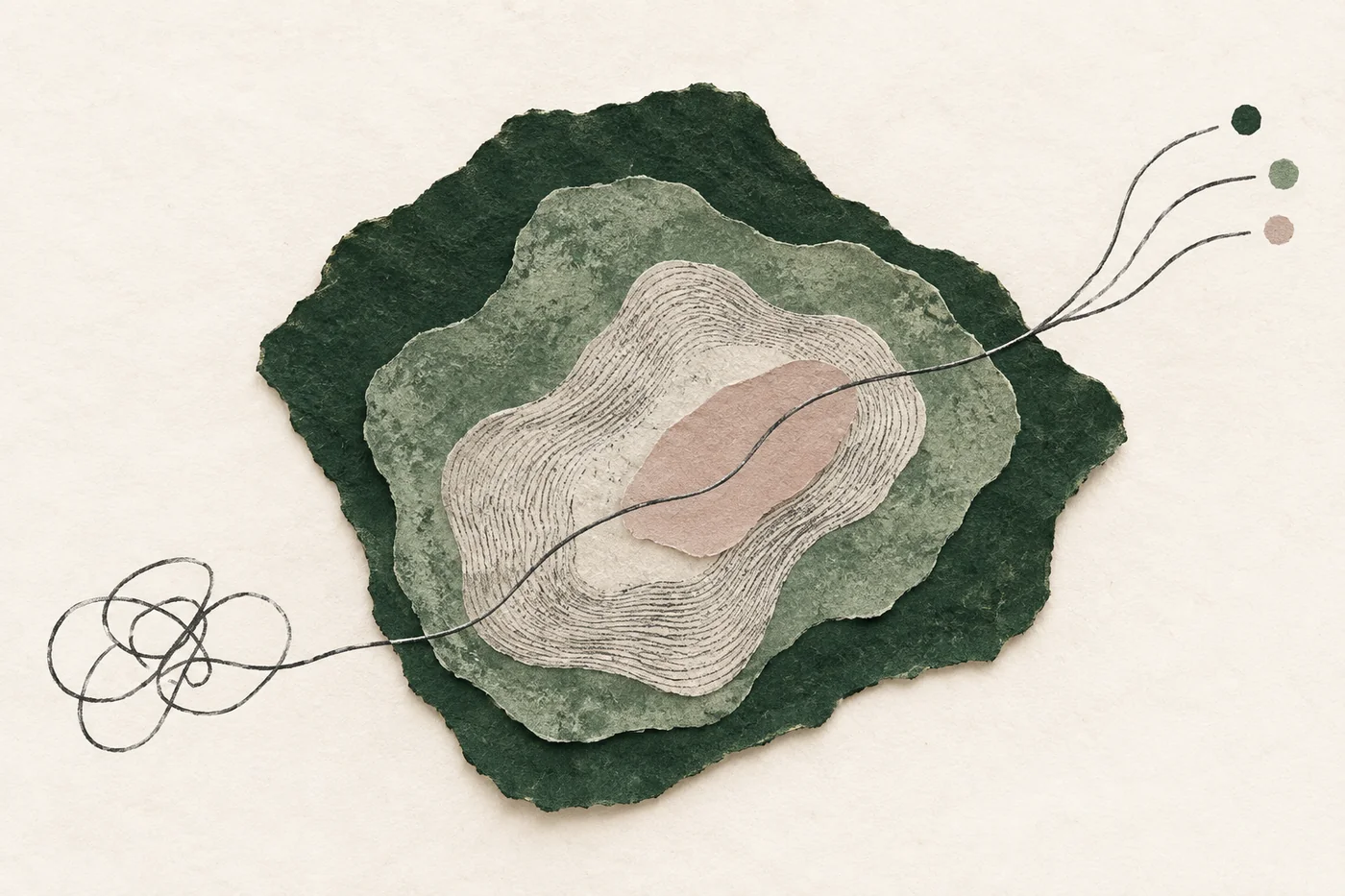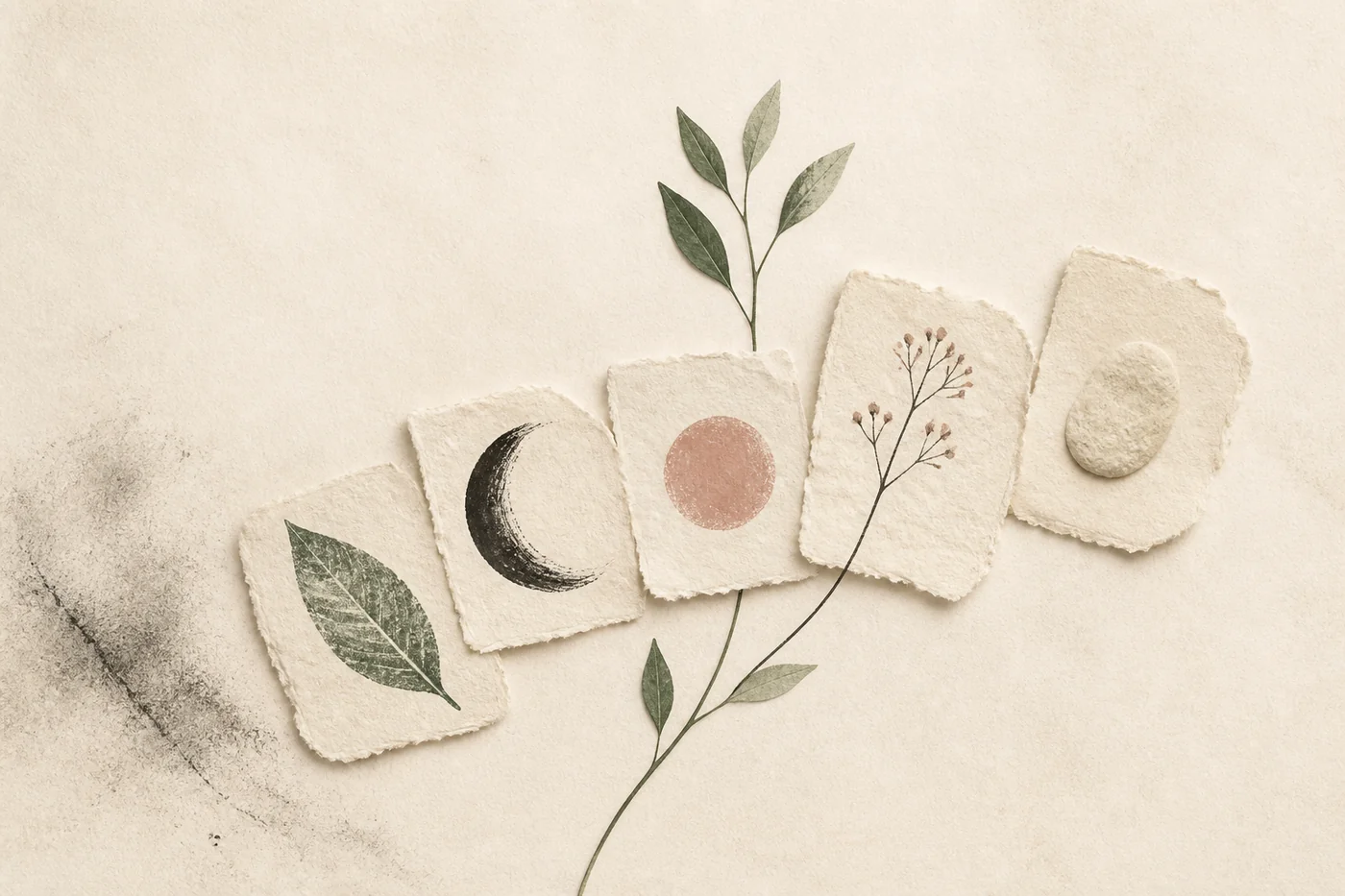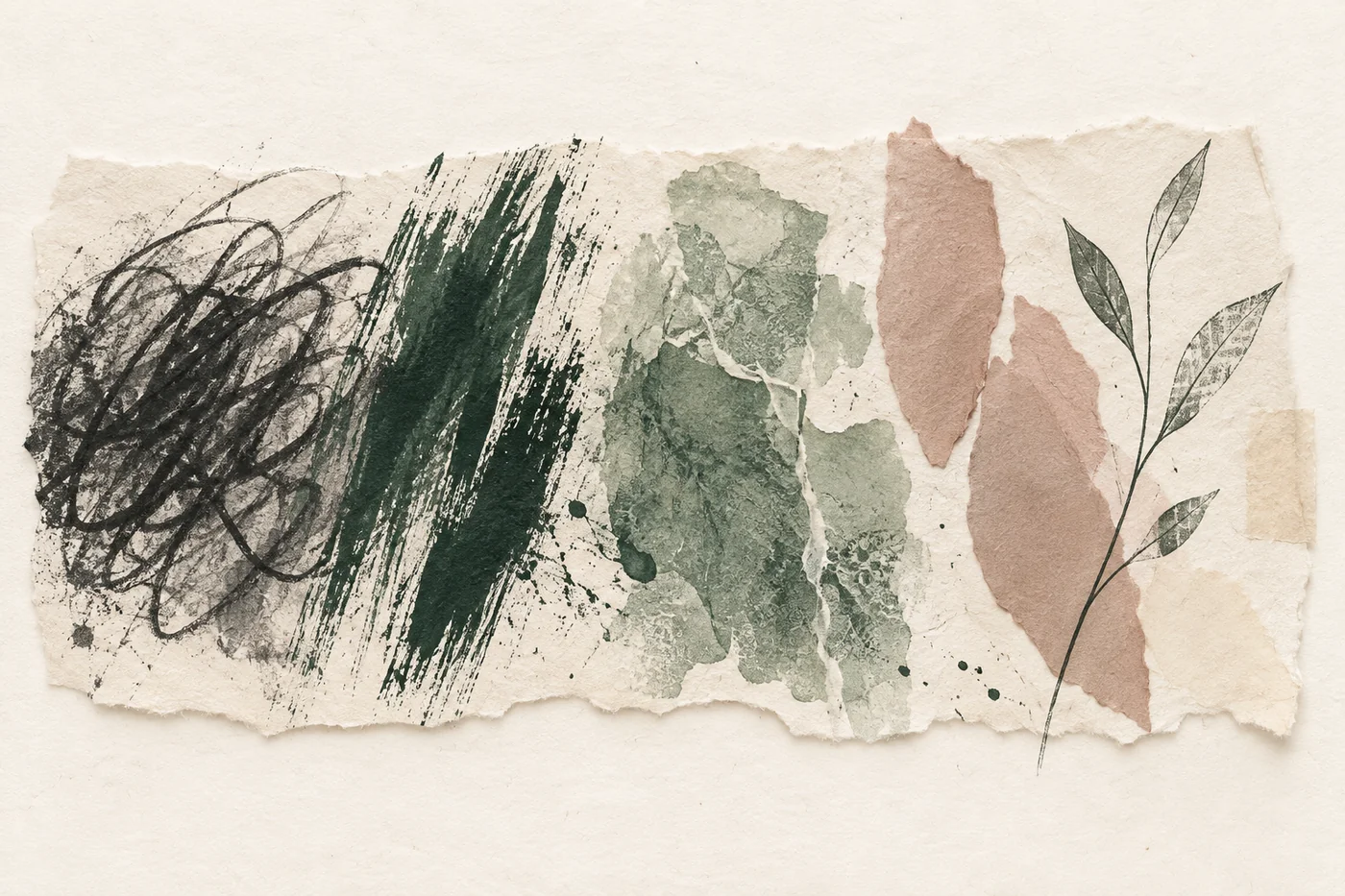
Some feelings do not fit neatly into words: tightness in your chest, fog behind your eyes, or a thought you can sense but cannot name. Art journaling gives those experiences another way onto the page — through color, shape, texture, and movement.
You do not need to be an artist. You do not need to make something beautiful. You only need a page and permission to let your hands say what sentences cannot.
What Is Art Journaling?
Art journaling combines visual expression — drawing, painting, collage, scribbling — with optional writing. The process can be structured around a prompt or begin with whatever mark feels possible.
For an anxious mind, visual making may feel different from prose because there is less pressure to find the correct sentence. A line can stay a line. A patch of color does not need an explanation. Art journaling is not art therapy, which involves a trained therapist; it is a self-guided creative practice.
15 Art Journal Prompts for Anxiety
Express what words cannot hold
- Color your mood. Choose colors that match how you feel, not how the feeling is supposed to look. Fill the page with only those colors.
- Draw your anxiety. If it were a creature, weather pattern, or landscape, what shape would it take?
- Create a before and after. Use the left half for how you feel now and the right half for how you want to feel. Let the contrast speak without labels.
- Scribble your stress out. Set a timer for two minutes and make continuous, messy marks. When you stop, write one word beside them.
- Collage a place that feels safer. Collect textures, colors, and forms that feel steady. Arrange them into somewhere you can visually return to.
Explore what is underneath
- Map your body. Draw a simple outline and mark where you notice tension, heaviness, numbness, warmth, or ease.
- Illustrate a recurring thought. Draw it as a loop, cage, landscape, or whatever image comes first. You do not have to explain it.
- Layer over old writing. Add paint or collage over an entry that no longer feels current — not to erase it, but to place something new beside it.
- Draw two versions of you. The version other people see and the version that appears when you are alone. Notice what changes.
- Create a feelings timeline. Draw a line through the past week and mark its rises, dips, pauses, and turns with color or symbols.
Build and anchor
- Design a symbol for what you need. Rest, safety, space, or permission can become a simple shape or glyph.
- Make a noticing collage. Instead of a gratitude list, gather small images or marks for ordinary details you appreciated or did not want to miss.
- Give one word the whole page. Choose an anchoring word and repeat, stretch, obscure, or decorate it in any way that feels right.
- Draw what grounding feels like. After a grounding exercise, translate the shift into shapes, weight, or texture.
- Create a permission slip. Give yourself permission to rest, feel, stop, or take up space. Make it as official or unruly as you want.
What You Need to Begin
- A notebook or loose paper. Thicker paper handles wet materials, but ordinary paper works for pencil, pen, and collage.
- Something that makes a mark. A pen, marker, crayon, or leftover paint is enough.
- Optional found material. Packaging, magazine fragments, ticket stubs, thread, or fabric can add texture.
- Permission to make a page you do not like. This may be the most useful supply.
If a prompt makes anxiety feel more intense, stop and return to something sensory in the room. You can close the page, cover it, or leave it unfinished. The process belongs to you.
If written structure feels more supportive, explore Self-Care Journal Prompts, Shadow Work Journal Prompts, or How to Start Journaling When You Have Anxiety.
Frequently Asked Questions
Do I need to be good at art to keep an art journal?
No. Art journaling is about expression rather than skill. Scribbles, torn paper, color fields, and simple marks can all hold meaning without becoming polished artwork.
Can art journaling help when I feel anxious?
Some people find that making marks gives difficult feelings a nonverbal outlet and offers something physical to focus on. It is a self-care practice, not a treatment, and you can stop whenever it feels unhelpful.
How is art journaling different from art therapy?
Art therapy is a clinical practice guided by a trained art therapist. Art journaling is a self-directed creative practice that anyone can try at home, without professional interpretation or a treatment plan.
What can I put in an art journal?
Anything that helps you express or notice: colors, lines, collage, texture, symbols, found paper, or a few written words. The page only needs to make sense to you.